
SDTI Monthly Newsletter
September 2026 Edition
 Get future newsletters in your RSS reader
Autumn Refresh: Back-to-School Tips for Self-Trained Service Dog Teams
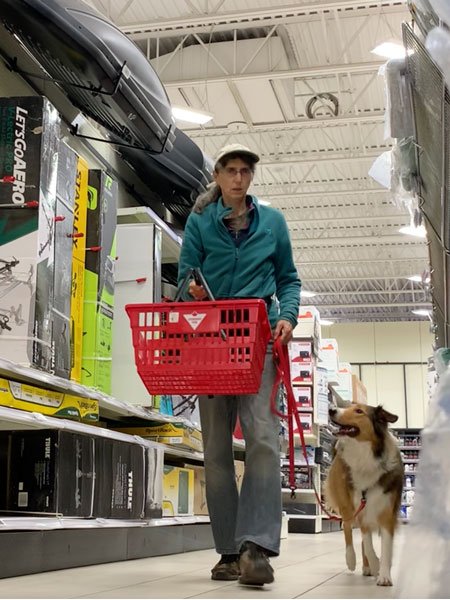
This issue covers clicker training fundamentals, why ongoing testing matters more than a final pass/fail, how to evaluate your adolescent dog's exercise needs, and practical tips for making training easier to fit into your routine.
Mini Quiz Challenge
As daylight and weather continue to shift in September, what should handlers keep in mind about their training routine?
A) Nothing changes — training should stay exactly the same year-round
B) It’s a good time to reassess exercise, timing, and environments as conditions change
C) Just shift all training sessions later in the day to match the new schedule
D) Only the dog’s routine matters, not the handler’s
Did You Know?
That that a change in family routine, like kids heading back to school, can shift a service dog’s schedule too? Dogs often thrive on predictability, and a sudden change in when the house is quiet, when walks happen, or when everyone’s home can be unsettling. Keeping a few anchor points consistent through the transition can help your dog settle into the new normal faster.
That whether or not you have kids going back to school, bus air brakes, school bells, and the sudden burst of kids at dismissal are common sounds and sights many service dogs have never been deliberately conditioned to? These are prime candidates for planned desensitization work well before you actually need your dog to be calm around them. They are a predictable pattern you can plan around and also prepare a dog for similar situations.
That Did you know that not every child who approaches your working dog understands service dog etiquette? Back-to-school season means more encounters with kids at bus stops, school entrances, and malls. Having a simple, kid-friendly script ready (“She’s working, but you can wave!”) can prevent unwanted interactions before they start.
Featured Resources
Podcast: Clicker Training
What is clicker training really about? And when does using an actual clicker make a difference? In this episode of Dogs Explained, I explore what I’ve learned from nearly two decades of using clickers and other markers in dog training. A clicker is just one type of marker, but its precise timing can make it an incredibly useful communication tool. Clicker training is often misunderstood. It’s not really about the clicker at all.
Free Blog Post: Importance of ongoing and practice tests in service dogs
Most people think of a test as something that happens at the end of learning. You study, take the test, pass, and you’re finished.
Service dog training doesn’t work that way.
A public access test may be the final assessment before a team is recognized as a working service dog, but it shouldn’t be the end of training. In fact, I believe using testing only as an end goal misses one of its greatest benefits.
Testing is a helpful way to assess where your dog is really at so you can better support her in what she needs to know, do and experience. Ongoing testing is much more useful than simply using the test as a finish line.
Playlist of Dog Training Videos

Dogs Explained
Looking for videos on a specific training topic? Our new page, Dogs Explained, sorts our YouTube content by topic — so you can find exactly what you need without digging through the whole channel.
Video: Getting started in clicker training
Discover the 10 skills you need to think about to make your dog’s clicker training experience the best it can be! I use capturing eye contact as the example behavior.
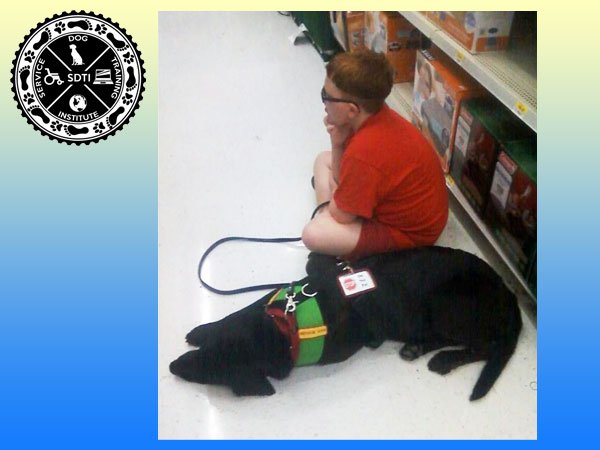
Training Tips
Make Training Easy for yourself
One of the key things I do is to keep the training equipment out for what we are currently working on. If I have to take it out and set it out each time before training, training is much less likely to happen. Carve out a small space near where the training happens and place your equipment right there. Put it in a box or rubbermaid if it needs to be out of sight and reach, or if it’s big, drape a cloth or blanket over it. Then when you are motivated, it’s right there ready to go. (If you have followed me at all, you know I train in my house and yard and don’t have a dedicated space to train but I can always find somewhere to place the equipment out of the way.)
Train when it works for you (and your dog)
Depending on the type of person you are, either choose times through the day that make sense for you or train spontaneously. There are no rules to say when teaching your dog is right or wrong. Only you and your situation can tell you that.
Set small objectives for each training session
While you need to keep the final behavior in mind, narrow your focus for each training session to tiny doable slices you and your dog can do. A single session with 10 repetitions where your dog is highly successful is immensely better than 3 session of 10 less successful repetitions. Move up the challenge in tiny increments, not big jumps. You will find it may also take less repetitions to achieve your objectives!
Events This Month
FREE QA Chat
Topic: Exercise & Your Service Dog
Date: Saturday, September 12, 2026
Time: 1:00 PM PDT (Pacific/Vancouver) | (UTC-7)
Your Local Time: Click here to see this in your time zone
Exercise is an important part of your dog’s ability to learn. Discover how to evaluate your adolescent and adult dog for suitable physical exercise levels. What’s too much? What’s too little? How can you make sure your dog’s needs are met for both exercise and rest while working. Bring your questions, share your experiences. Meet the community!
The QA Chat will be recorded and added to the library so if you cannot attend, it will be available. At just CA$11 per month (~US$8.10), it’s a great way to support us. Sign up for a day, get access for the month. Cancel anytime!