
SDTI Monthly Newsletter
February 2026 Edition
 Get future newsletters in your RSS reader
How Dogs Learn: Teaching with PrinciplesPart 1 of 3 Emotions
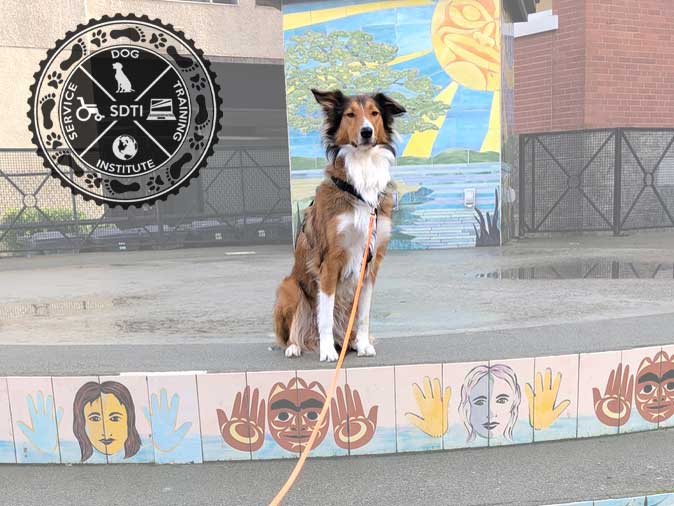
This month, and for the next two, the focus of the newsletter will be on applying the principles of learning to training your service dog.
Featured Resource This Month
Highlighted SDTI Courses
This month’s special offer is 50% off the following online classes and webinar, that deal with addressing emotions in dogs:
1. Harnesses, Vests and Head Halters
2. Public Access Confidence Games
3. Stress Webinar
ACCESS
24/7 for 2 years
FORMAT
Self-study
Mini Quiz Challenge
A dog who becomes suddenly calm and still when putting on their service vest might be experiencing:
A) True “work mode” focus
B) Learned helplessness and shutdown
C) Perfect obedience training
D) Natural maturity and calmness
Did You Know?
Did you know that the critical socialization window (roughly 3-14 weeks) is so powerful that what puppies learn during this brief period often sticks for life? Missing this window doesn’t mean a dog can’t learn, but it makes building service dog-level confidence much harder.
Did you know that your dog might struggle to perform a behavior they know well simply because they learned it in a different emotional state? A dog who practices “settle” only when tired may not know how to settle when energized—this is called mood state-dependent learning.
Did you know that a dog who becomes suddenly calm when putting on their vest might not be “in work mode” but actually experiencing learned helplessness? True work mode comes from willing engagement, not resignation.
Did you know that counterconditioning isn’t about distracting your service dog from their fear or concern with food—it’s about actually rewiring their brain to change the underlying emotion from “worried!” to “yay!”? This is why service dog programs invest so much time pairing wheelchairs, medical equipment, and hospitals with amazing rewards—real counterconditioning changes how your dog feels about their future work environment, not just what they do in the moment.
Did you know that when your leashed service dog lunges or barks at another dog they want to greet, it’s often not aggression—it’s barrier frustration redirecting into aggressive-looking behavior? This frustration from being unable to reach something they want can redirect onto the leash or handler, which is why teaching calm patience around exciting distractions is crucial for reliable public access work.
Featured Resources
Free Blog Post: Understanding How Dogs Learn Part 1 The Whole Dog - Understanding Emotion, Biology, and Social Learning
Before teaching any cues or behaviors, successful service dog training starts with understanding your dog as a complete being with emotions, instincts, and social needs. This post explores how your dog’s emotional state affects their ability to learn, why evolutionary biology makes some things easier or harder to teach, and how dogs constantly learn by watching you and other dogs. You’ll discover why managing stress levels, working with natural instincts, and creating positive emotional associations are the foundation for everything else in training.
Video: Applying Premack Principle to Change Emotion & Teaching Clover to Calm Down at the End of a Training or Play Session
Part of teaching dogs is being willing to experiment with applying the principles. Clover has been very fearful of different harnesses and putting them on. She got pinched by them several times in her previous home. I’ve been pinched by the clip and it really hurts! I later also figured out her long chest hair was also getting caught in the harness when it was shifted (I trimmed it).
I thought I would try using Premack Principle to change how she feels about the harness as a starting point for changing how she responds to it when it’s put on. By alternating playing with it then with a familiar and safe toy, the fun and excitement of the safe toy will “rub off” on the harness.
Watch this 12 minute video to the 7 min mark to see how I apply Premack Principle to change Clover’s emotions. After that we focus on calming down with slower behaviors and ending the session without arousal and frustration barking. I use massage and some calmly delivered food.
Paid Blog Post: Teaching Handlers to Apply “The Whole Dog” Principles: A Guide for Service Dog Trainers Part 1A Emotional Awareness & Management
The most critical skill handlers need isn’t perfect timing or flawless technique—it’s the ability to read their dog’s emotional state and adjust accordingly in real-time. This post gives you practical coaching strategies to help handlers recognize when their dog is in the learning zone, understand how their own emotions affect their dog, and protect their dogs from experiences that create lasting negative associations. You’ll learn how to guide handlers from simply following instructions to making informed decisions based on what they observe in their dog.
Paid Blog Post: Teaching Handlers to Apply “The Whole Dog” Principles: A Guide for Service Dog Trainers Part 1B Working With Biology, Not Against It
Once handlers can read emotional states, they need to understand how to work with their dog’s evolutionary wiring and create genuine emotional change, not just behavior compliance. This post provides coaching strategies for helping handlers recognize why dogs are biologically prepared to fear certain things, maximize critical early socialization windows, and use counterconditioning to actually change how their dog feels rather than just suppressing fearful behavior. You’ll learn how to guide handlers through creating powerful positive associations that build confident, resilient service dogs.
Paid Blog Post: Teaching Handlers to Apply “The Whole Dog” Principles: A Guide for Service Dog Trainers Part 1C Teaching Handlers to Recognize Problems and Build Resilient Skills
Even well-meaning handlers can miss the signs of learned helplessness, escalating frustration, and context-dependent learning that undermine their training efforts. This post equips you with coaching strategies to help handlers distinguish between genuine engagement and shutdown, recognize frustration before it boils over into aggression, train behaviors across varied emotional states for true reliability, and understand that dogs are always learning through observation. You’ll also learn how to move handlers from following recipes to thinking independently, asking the right assessment questions, and solving their own training challenges.
Training Tips
Emotional Priming is a Useful Approach
Starting a training session with something easy and fun can actually improve your dog’s performance on everything that follows. This is called emotional priming—your dog’s current emotional state colors how they approach the next challenge.
Social Facilitation
Dogs often perform learned behaviors with more energy and enthusiasm when other dogs are present. This is social facilitation, and it’s why group classes can energize a less motivated performer—or overstimulate a dog who needs calm focus. That’s why it’s so valuable to find a partner with a calm dog to train with or one who is enthusiastic for a specific task you dog does not enjoy.
Counter Conditioning
Giving food to a fearful dog who’s already over threshold isn’t counterconditioning—it’s bribery under duress. Real counterconditioning requires the dog to be calm enough that the positive association can actually form, which usually means working at a greater distance from the scary thing.
Latent Learning
Your dog is always learning, even when you’re not actively training. Latent learning means your service dog observes and absorbs information about your routines, medical equipment locations, and patterns in your day—often performing tasks or showing awareness of situations you never explicitly trained them for, simply because they’ve been watching all along. An example is one of my dogs opened round-handled door knobs in an emergency even though we never taught it!
Events This Month
FREE QA Chat
Date: Sat. Feb. 14 at 1:00PM Pacific
Topic: Handlers Under Stress (How to remember cues for your dog)
Find out what strategies other handlers use to prepare them how to act in unusual and emergency situations. Bring your questions, share your experiences. Meet the community!
The QA Chat will be recorded and added to the library so if you cannot attend, it will be available. At just CA$11 per month (~US$8.25), it’s a great way to support us. Sign up for a day, get access for the month. Cancel anytime!